

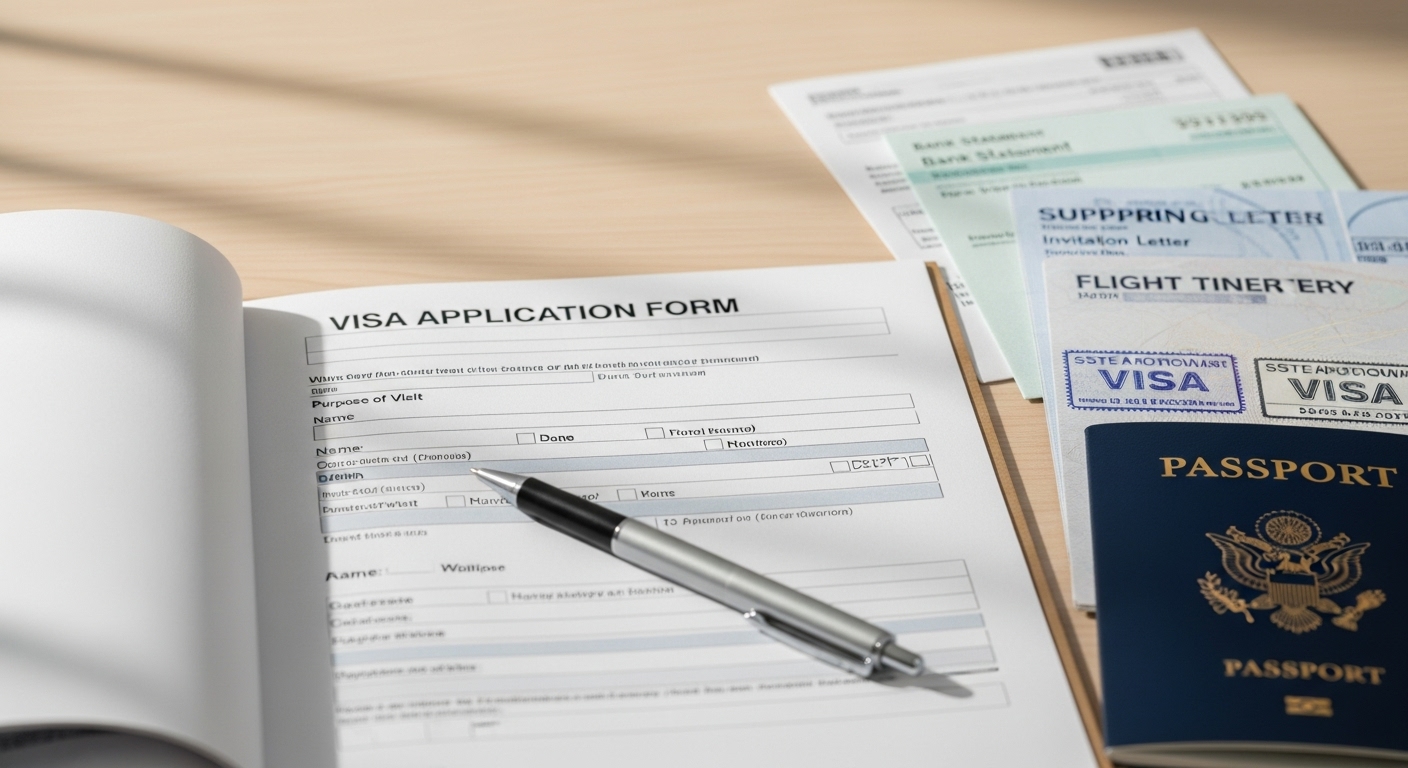


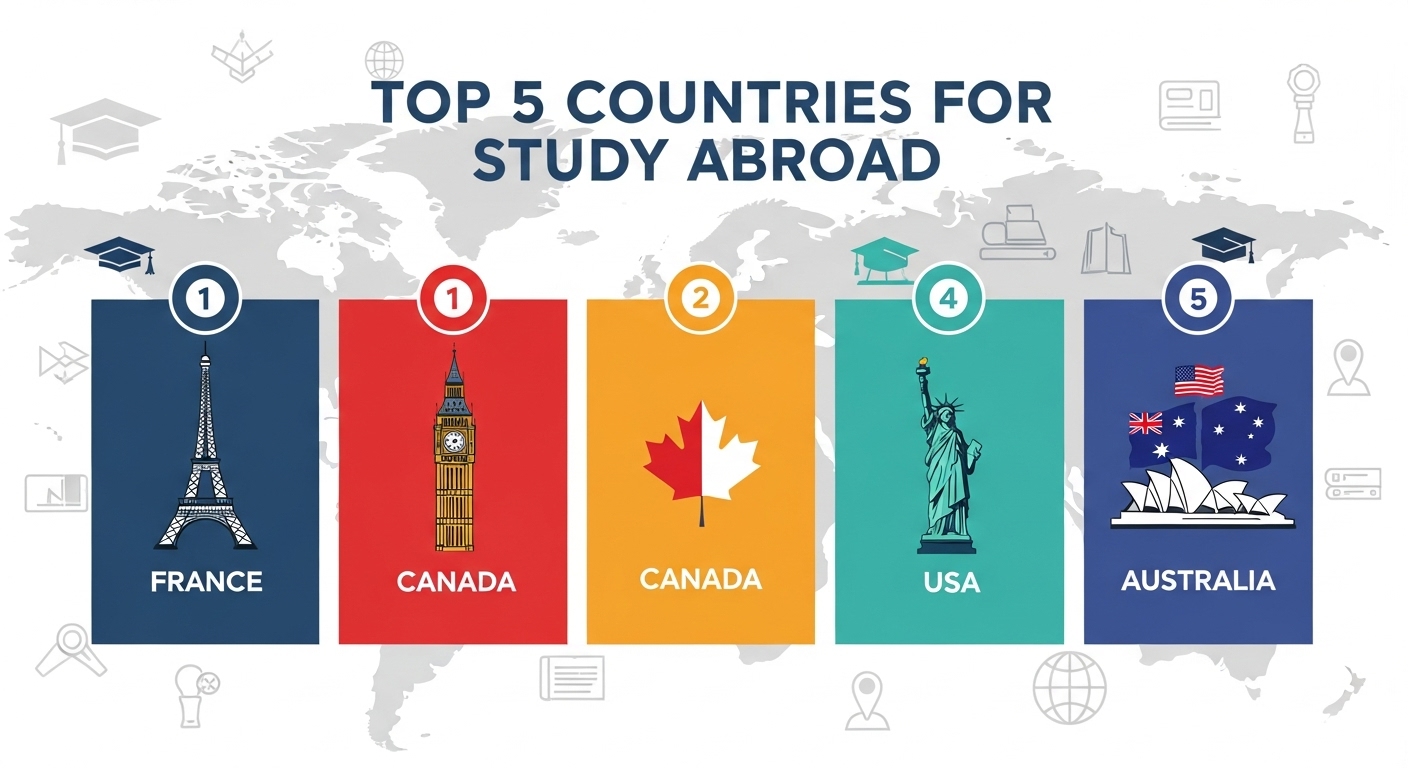
Studying abroad is one of the most transformative experiences a student can have. It not only provides access to world-class education but also opens doors to global career opportunities, cultural exposure, and personal growth.
However, choosing the right country and understanding the student visa process is crucial for a successful journey. In this guide, we explore the top 5 countries for international students in 2026 and explain how to secure a student visa for each destination.
Studying abroad offers numerous benefits:
High-Quality Education: Access top-ranked universities and research facilities.
Global Networking: Connect with students and professionals worldwide.
Career Opportunities: Gain international work experience and internships.
Cultural Exposure: Learn new languages and experience different cultures.
Personal Growth: Develop independence, confidence, and problem-solving skills.
With these advantages, selecting the right country and visa is a key step to achieving your academic and career goals.
The USA is a popular destination for international students due to its world-class universities like Harvard, MIT, and Stanford.
Student Visa: F-1 Visa
Requirements: Admission letter from a US university, proof of financial support, SEVIS fee payment, valid passport.
Process: Complete the DS-160 form, schedule an interview at the US embassy/consulate, and provide supporting documents.
Tip: Show strong ties to your home country to demonstrate you will return after studies.
The UK offers top programs at prestigious institutions such as Oxford, Cambridge, and Imperial College London.
Student Visa: Tier 4 (General) / Student Route Visa
Requirements: CAS (Confirmation of Acceptance for Studies), English language proof, financial evidence.
Process: Apply online, attend biometrics appointment, and prepare for possible interview.
Tip: Check if your course qualifies for post-study work visa options.
Canada is renowned for its friendly immigration policies and high-quality education. Universities like the University of Toronto and McGill attract global students.
Student Visa: Study Permit
Requirements: Letter of acceptance, proof of financial ability, valid passport, police clearance, and medical exam.
Process: Apply online or at Canadian Visa Application Centres (VACs), provide biometrics, and attend an interview if required.
Tip: Consider programs that provide work permits for international students after graduation.
Australia is a top choice for students seeking a balance between education and lifestyle, with institutions like the University of Melbourne and ANU.
Student Visa: Subclass 500
Requirements: Confirmation of Enrolment (CoE), financial proof, English proficiency, health insurance.
Process: Apply online via ImmiAccount, provide biometrics and documents, and complete a health assessment.
Tip: Apply early to secure scholarships and accommodations.
Germany offers tuition-free or low-cost education and strong STEM programs at universities like TU Munich and Heidelberg.
Student Visa: National Visa for Study
Requirements: University admission, proof of financial resources (~€11,000/year), health insurance, valid passport.
Process: Apply at the German embassy or consulate, submit all documents, and attend a visa interview.
Tip: Learning basic German improves daily life and internship opportunities.
While each country has specific rules, the common requirements include:
Valid passport
Admission letter from an accredited university
Proof of sufficient funds
English or local language proficiency
Health and travel insurance
Apply to University: Obtain your acceptance/admission letter.
Prepare Documents: Gather financial proof, passport, academic records, and English test scores.
Complete Visa Application: Fill online forms or embassy-specific applications.
Schedule Interview: Attend visa interviews if required.
Receive Visa Approval: Once approved, plan travel and accommodation.
Apply early to allow processing time.
Be honest and complete with all documentation.
Show strong ties to home country for return assurance.
Prepare for interview questions confidently.
Follow health and travel insurance requirements.
Studying abroad is a life-changing opportunity, and choosing the right country is the first step. The USA, UK, Canada, Australia, and Germany are among the top destinations for international students due to quality education, career prospects, and student-friendly policies.
By understanding the student visa requirements and application process, you can secure your place abroad with confidence and start an exciting global academic journey.
Which country is best for international students?
It depends on your course, budget, and career goals. USA and UK are preferred for top-ranked universities, while Germany offers low-cost education.
How long does it take to get a student visa?
Processing time varies: typically 4-12 weeks depending on the country and completeness of your documents.
Can I work while studying abroad?
Most countries allow part-time work for students. Always check the visa regulations for work permits.
Do I need health insurance for a student visa?
Yes, most countries require health/travel insurance to ensure coverage during your stay.
Can I switch universities after getting a student visa?
It is possible but requires notifying the immigration authorities and updating your visa or permit.
Exhibition spaces, sponsorship packages, and startup pitch slots are limited.
Join the Summit
Muhammad Akmal is a migration and visa expert at Vmigrant, specializing in helping applicants navigate study, work, and permanent residency opportunities abroad. He simplifies complex immigration processes, providing clear and practical guidance to empower individuals and families to make informed decisions and achieve successful migration outcomes.






 4k
4k


Comments