

Canada is one of the most sought-after destinations for skilled workers across the globe. Whether you’re a professional looking for new opportunities or planning to move with your family, obtaining a work visa is the first step toward making Canada your new home. In this blog, we’ll walk you through the process of getting a Canadian work visa, eligibility requirements, the different types of work permits, and how you can make your application stand out.
At V Migrant, we’re here to help guide you through every stage of your Canadian work visa journey, ensuring that your application is as strong as possible. Ready to take the leap? Let's dive in!
A Canadian work visa, also referred to as a work permit, is an official document that allows foreign nationals to work in Canada. These visas are typically issued for temporary stays, but there are pathways to permanent residency once you’ve gained Canadian work experience.
There are two main types of work permits in Canada:
Employer-Specific Work Permit: Tied to a specific employer, job, and location.
Open Work Permit: Allows you to work for any employer in Canada, with few restrictions.
Tip: Want to know more about your eligibility for a Canadian work permit? Check out our Canada Visa Page.
Before applying for a work visa, it’s important to ensure you meet the eligibility requirements. While the criteria can vary based on the type of work permit, here are the common requirements for most applicants:
A Valid Job Offer: You generally need a job offer from a Canadian employer to qualify for a work permit. The employer may need to obtain a Labour Market Impact Assessment (LMIA) to show that no Canadian worker is available for the job.
Proof of Qualifications: You must meet the qualifications for the job you’ve been offered, including education, work experience, and skills.
Proof of Funds: You need to show that you can financially support yourself (and your family, if applicable) during your stay in Canada.
Intention to Leave: Applicants must demonstrate their intention to leave Canada once their work permit expires.
Medical & Criminal Clearances: Some applicants may need to undergo a medical exam or provide police clearance.
For those without a job offer, Open Work Permits offer more flexibility, such as for spouses of skilled workers or international students.
Canada offers several pathways to obtain a work permit, depending on your situation:
Employer-Specific Work Permits (Closed Work Permits): These are tied to a specific employer and require an LMIA.
Open Work Permits: These are available to certain individuals, like international graduates or spouses of skilled workers, and do not require an LMIA.
Post-Graduation Work Permit (PGWP): For international students who have completed a program at a recognized Canadian institution, this work permit allows them to work anywhere in Canada.
Intra-Company Transfers: If you are currently working for a multinational company, you may be able to transfer to a Canadian branch under an open work permit.
Tip: To calculate how many points you may score toward permanent residency based on your Canadian work experience, use the Canada PR Points Calculator.
The application process can be broken down into several steps. Here’s a general guide:
Make sure you meet the eligibility requirements for the type of work permit you are applying for. If you have a job offer, ensure that your employer has completed the LMIA process (if required).
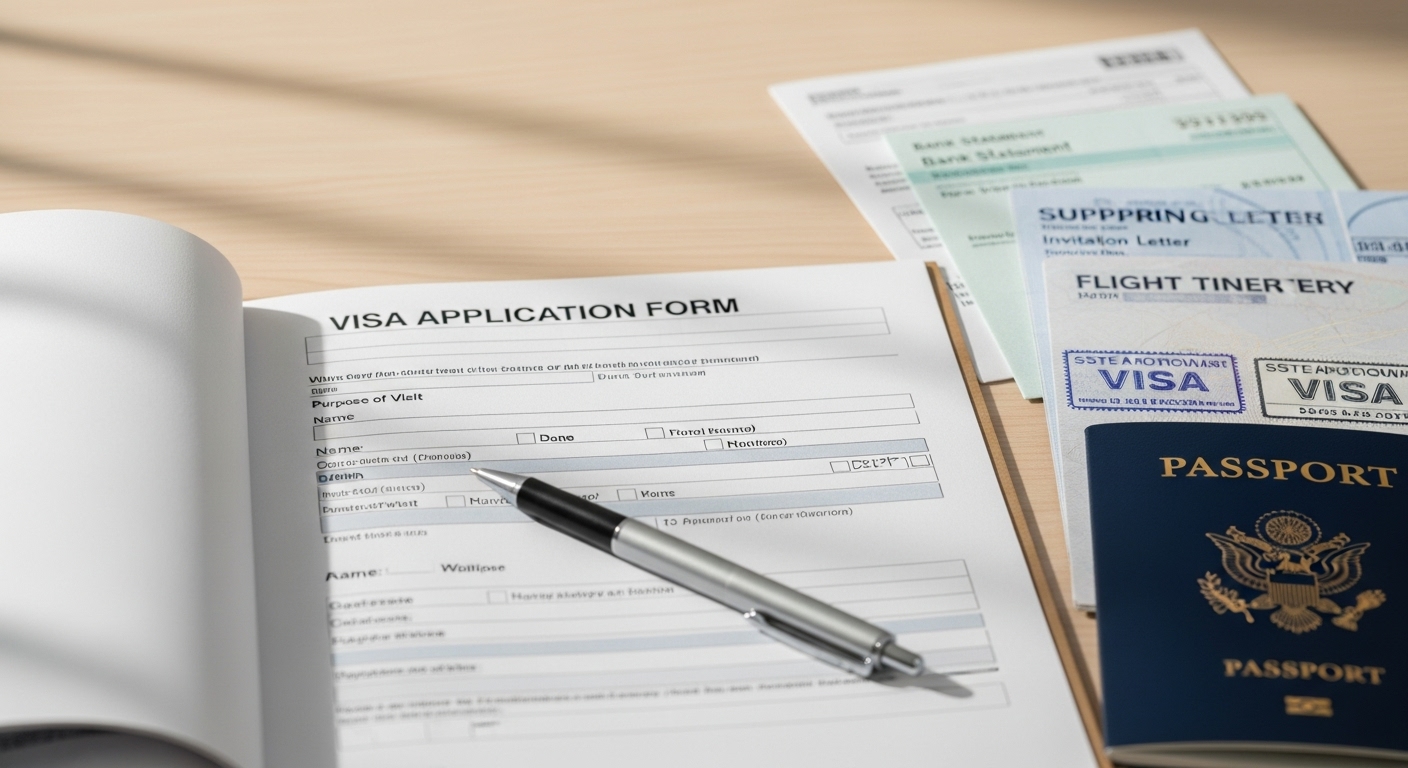
Common documents required include:
Job offer letter or contract
LMIA (if applicable)
Educational certificates and work experience documents
Proof of funds to support yourself and your family
Medical examination results (if required)
Police clearance certificate (if applicable)
You can submit your application online or through a Visa Application Centre (VAC) in your home country.
Some applicants may need to submit biometrics (fingerprints and photos). You might also need to undergo a medical examination, especially if you are working in healthcare or childcare.
The processing time for a work permit application can vary, depending on the type of permit and your country of residence. It's important to apply well in advance to avoid delays.
While applying for a Canadian work visa, many applicants make mistakes that delay or even reject their application. Here are a few things to avoid:
Incomplete Applications: Double-check your application to ensure that you have included all the required documents and information.
Missing the Biometrics Appointment: If biometrics are required, make sure to attend your appointment on time.
Incorrect LMIA: If your employer needs an LMIA, ensure that it is valid and properly completed.
Financial Insufficiency: Make sure you provide clear evidence that you have enough funds to support yourself in Canada.
A Canadian work permit can be a stepping stone to permanent residency (PR) in Canada. Here are a few pathways to transition to PR:
Express Entry System: Foreign workers who gain Canadian work experience can apply for permanent residency through the Express Entry system. The Canadian Experience Class (CEC) stream is particularly relevant for work permit holders.
Provincial Nominee Program (PNP): Provinces like Ontario, British Columbia, and Alberta have their own immigration streams that allow work permit holders to apply for PR.
Canadian Experience: Once you’ve gained at least one year of Canadian work experience, you may be eligible to apply for PR through various programs.
Do I need a job offer to apply for a work permit?
Yes, most work permits require a job offer from a Canadian employer.
Can I extend my work permit?
Yes, you can apply for an extension before your current permit expires.
How long does the work permit process take?
Processing times vary but can typically range from several weeks to months, depending on the type of permit and location.
Can my family come with me on a work permit?
Yes, you can include your spouse and dependent children in your application.
Exhibition spaces, sponsorship packages, and startup pitch slots are limited.
Join the Summit
Muhammad Akmal is a migration and visa expert at Vmigrant, specializing in helping applicants navigate study, work, and permanent residency opportunities abroad. He simplifies complex immigration processes, providing clear and practical guidance to empower individuals and families to make informed decisions and achieve successful migration outcomes.






 4k
4k


Comments